Geographical position
The municipality of Vinica is located in the eastern part of Macedonia and with its area of 334 km2 is one of the smaller municipalities. It occupies the south-eastern part of Vinicko – the Kocana valley. It is bounded on the southern side by the northern slopes of Mount Plachkovica and on the east by the slopes of Mount Golak. It belongs to the Eastern planning region. The municipal center stretches between Vinicka and Gradecka reka, but spreads in all directions. Besides the city of Vinica, there are 16 more settlements in the municipality. The location of the Municipality allows a good connection with neighboring municipalities in the region.
With its location in the Municipality, mountain, hill and valley relief structures are clearly defined. The southern and eastern sides are dominated by the mountains Plackovica with the highest peak Lisec 1754 m and Golak with a height of up to 1000 m. Due to its characteristics, the hilly relief stands out on the slopes of these mountains. The plain relief of the Municipality is dominant in the northern and western part and is located at an altitude of 390-450 m above sea level and covers the valley of the Bregalnica River and part of the Vinicko – Kochanska Valley. The characteristics of the relief also define the development of the municipality, so that agriculture dominates in the flat areas, while in the higher areas forests and meadows dominate, which are the basis for the wood industry and livestock.
Climate
With its position, the municipality of Vinica is protected from the penetration of cold winds from the north by the Osogovo Mountains, and from the warm winds from the south by Plackovica. The main penetration of warm air currents is from Povardarije through the valley of Bregalnica. This influence defines the climate as moderately continental, but the surrounding mountains change it somewhat with their influence. The average annual temperature is 13 ºС. The coldest month is January with 1.6 ºС, and the warmest July with 23.5 ºС, the transition from winter to summer is fast as the influence of the continental climate. Most of the time, the south-west wind blows in the municipality, which is warm and mild, as a result of the penetration of warm air currents from Povardaria and is most pronounced in the spring and autumn months. In addition to this wind, there is often a northwesterly wind, which is colder, and is most pronounced in March. According to the meteorological data, on average, there is about 530 mm of precipitation in Vinica per year, with rain being dominant with a share of 90%. The wettest month is May while the driest is August. The configuration of the terrain and climatic influences make it possible to have only 7 foggy days in a year.
Population
Over time, after censuses were conducted in the country, the number of the population constantly fluctuated due to socio-economic changes in society, so that until 1961 the population decreased due to the emigration of the population from the Municipality, and then the city population grew, but for the whole time rural-urban migration and emigration of the population to larger cities and abroad is felt. Because of that, in the period 1995-2005, the population decreased again, and in 2005, about 19,000 people lived in the municipality, of which about 10,000 live in the city. According to education, the population with secondary and lower education dominates. The main problem in the municipality is the high unemployment, which is as much as 46% of the working-age population, and therefore intensive activities are needed to improve the conditions for new employment.
Economy
The population in the municipality of Vinica is mostly engaged in agriculture, while the city is dominated by several industrial facilities from different sectors and service activities. The main industrial facilities in Vinica are: the “Tondah” building materials factory, the “Trico”, “Vinka” and “Vinichanka” textile factories, the wood processing facilities “Mebel-V” and “Mebel Trade”, the food industry “Vincini” and others smaller capacities.
The development of the city of Vinica is based on the restoration and reconstruction of the existing industry and a greater representation of service activities. The construction of new economic capacities of small and medium economy is planned, with the creation of conditions for permanent and sustainable economic development.
Cultural heritage
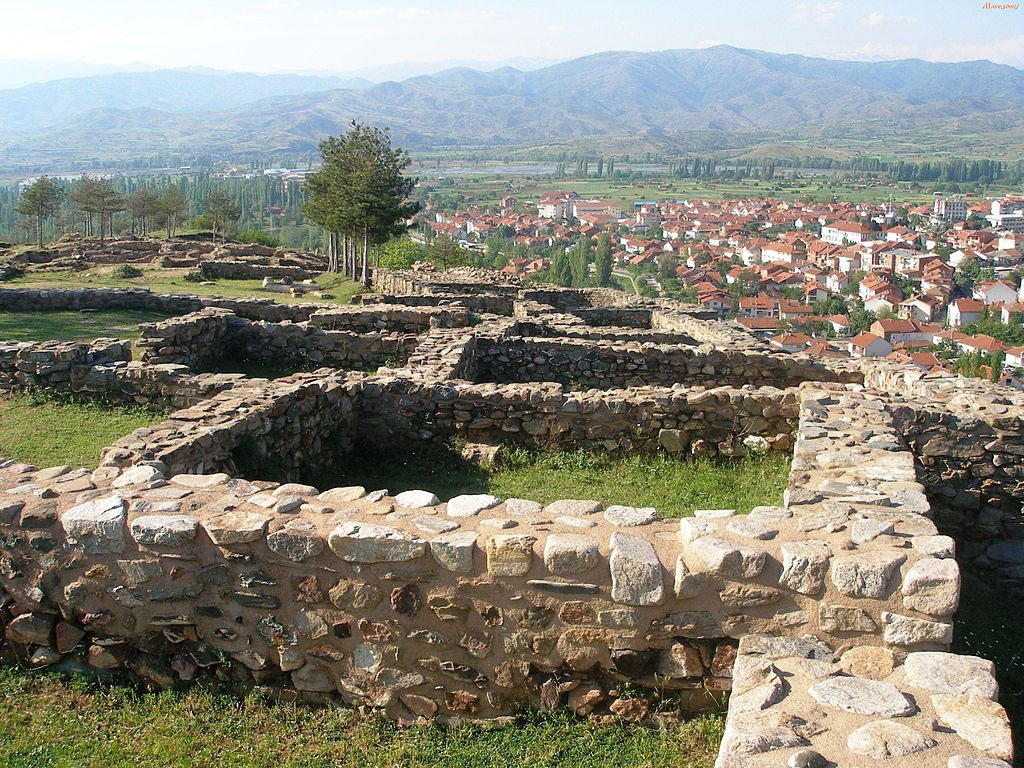
In the municipality of Vinica, the most famous archaeological site is the Vinica Kale, where authentic terracotta icons from the early Christian period were found and captivate with their originality. For the preservation of the cultural heritage for the needs of the GUP of the city, an Elaborate was prepared by the National Conservation Center – Skopje, Protection conservation foundations of immovable cultural heritage. The archaeological site is outside the planning scope of the DUP in question for Block 12. The municipality of Vinica belongs to the ranks of unencumbered environments in terms of the environment, as a result of the small number of inhabitants, the absence of heavy industry, climatic factors and of course the concern for the environment.