Climate conditions
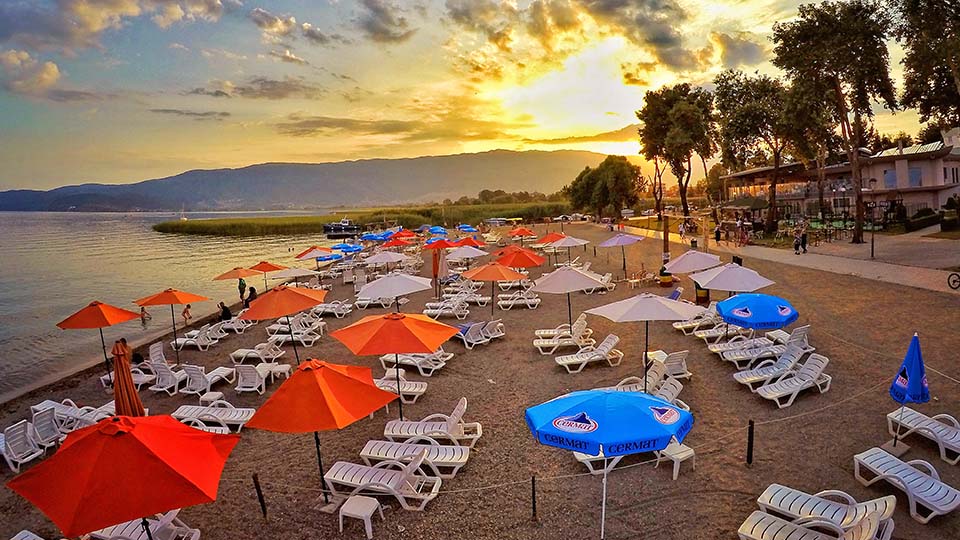
The maximum air temperatures in the months of July and August may vary from 28 ° C to – 33 ° C. In the summer season, that is, during the months of July and August, the water temperature can reach as high as 26.4 ° C. The average number of days with summer air temperature higher than 25 ° C and the surface area of the lake’s water at 20 ° C is 73-78 days, with the highest intensity in July and August. During the winter period of the year, the average monthly temperatures are above zero. In the mountainous areas above 1600 m. temperatures lower than 0 degrees start from December to the end of March.
Geographical position
The geographical position of Struga, the openness of the Struga valley, the mountains around the city, as well as the proximity of the lake, enable the wind to blow from all sides in Struga. The winds are divided into permanent and local. To the permanent winds, belong the winds from the south and from the north. Winds from the north usually come along the valley of the Crn Drim River and carry freshness throughout the year, but most often in winter. The southern wind blows usually in March and April, and less often in May. The southern wind is suitable for hunting of eel, bleaks, and rutilus rubilio ochridanus. Local winds are a product of unequal warming of the mainland and lake water. The characteristic wind for the Ohrid Lake is the wind Strmec. It comes from the surrounding mountains and is therefore cold, blowing all night to sunrise with a silent wind and full wave.
The Crn Drim quay
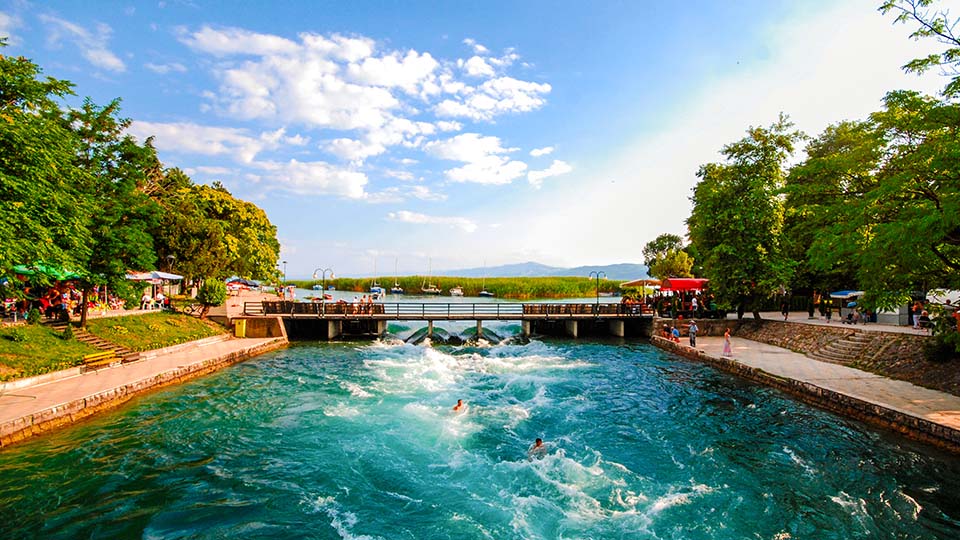
Ideal for a peaceful walk and enjoying a beautiful view along the water itself, the Crn Drim quays have benches and shadows and are connected with three bridges. The quay on the eastern side of the river’s outflow from the lake is called “Sergei Yesenin” and is located next to the entrance to the city beach. On this quay, besides Yesenin, there are busts of Adam Mickjevich and Aco Shopov. The water from the Ohrid Lake flows through the river Crn Drim which, passing through the middle of the city, through the Struga Field and the ravine, continues through Albania and flows into the Adriatic Sea. The outflow of the water near the Hotel Drim is a special attraction for every visitor to Struga.
Church St. Gjorgji (1835)
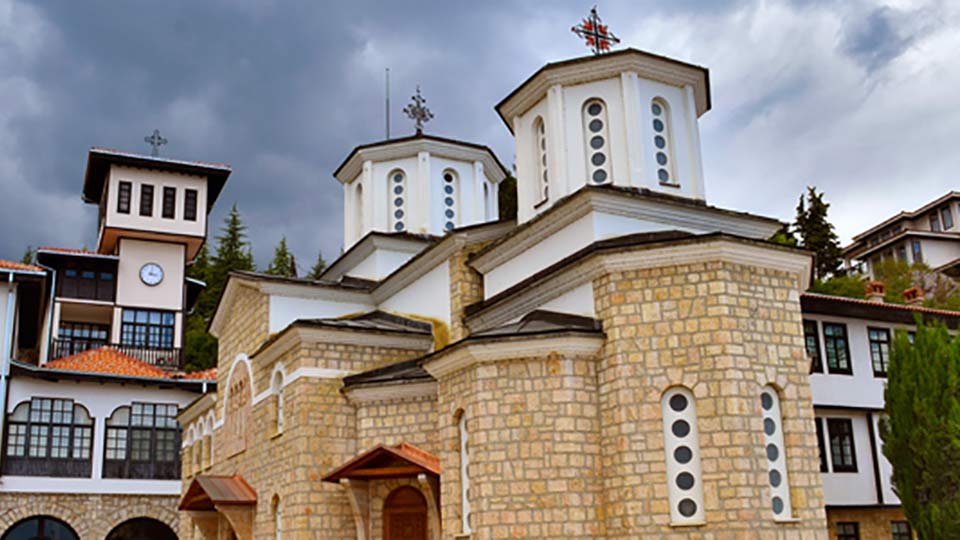
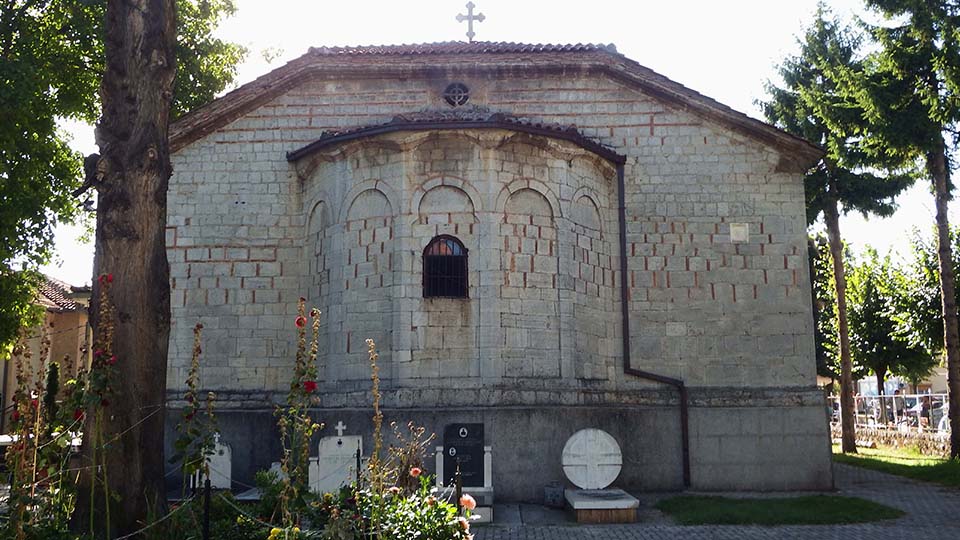
St. Gjorgji is a city cathedral church in the centre of Struga. It was built on the foundations of a much older church from the 16th century. It contains frescoes from the end of the 19th century, but the real treasure is the small gallery of icons from the 13th century until the 19th century, including the famous icon of St. Gjorgji painted in 1267. The long inscription on the background of the icon means “Struga Ohridska”.
National Museum Dr. Nikola Nezlobinski
The National Museum in Struga was founded in 1928 by Dr. Nikola Nezlobinski, a Roman emigrant who came to Struga after the Russian Revolution in the 20s of the last century. At the beginning, a natural science department was opened, with a permanent zoological collection composed of his personal collection, which today is enriched with various insects, birds, fish and animals from the Ohrid-Prespa region. Nezlobinski and his associates prepared hundreds of insects, birds and animals living in swamps near Struga. Later, in 1961, an archaeological department was established in the museum, which houses a rich collection of items from prehistoric times to the Middle Ages. In 1974, the art gallery Vangel Kodzoman, a famous artist from here, was created with a permanent artistic setting. The museum carries out research and collection of materials in the fields of history, archeology, ethnology, botany and zoology.
Memorial house of the Miladinovci brothers
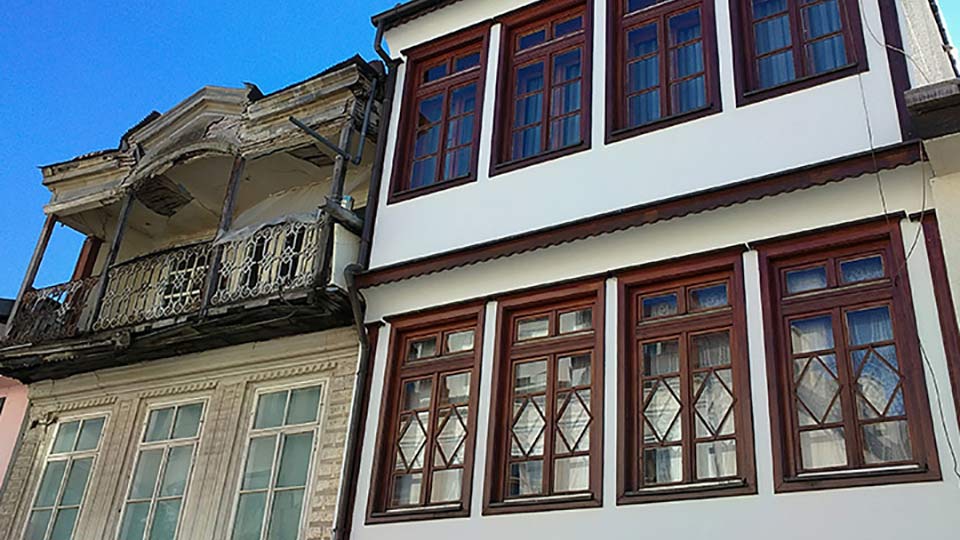
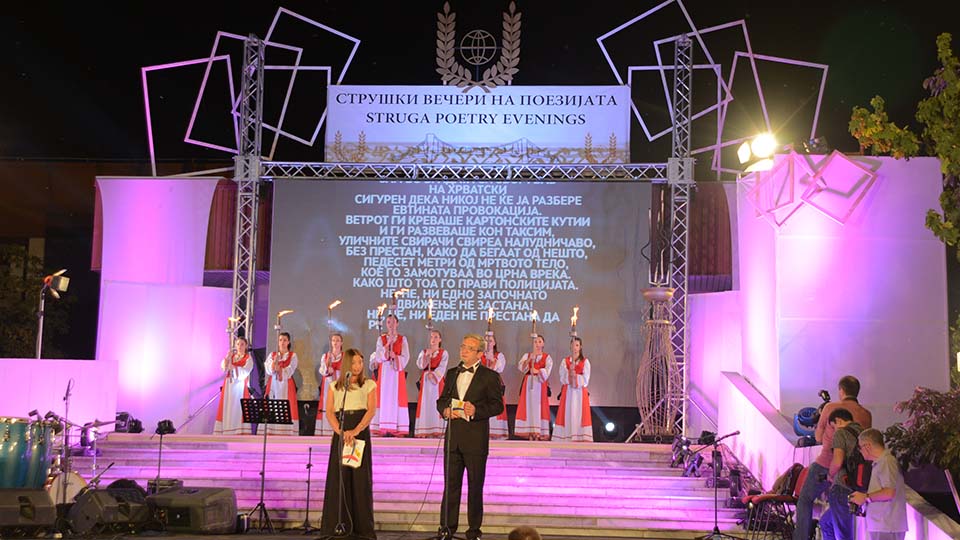
The memorial house of the brothers Dimitar and Konstantin Miladinovci is located in the centre of Struga. It is renovated on the foundations of the old house of Miladinovci. It contains materials from the life and works of these famous Macedonian revivers, winners of the Golden Wreath of Poetry. In honour of their poetic achievements and collections of folk songs and creations, published in the famous work Collection of Folk Songs, today the famous poetry manifestation Struga Poetry Evenings is held. The event traditionally begins with the unforgettable poem Longing for the south by Konstantin Miladinov, written while he was staying in Moscow.
Kalista
Five kilometres south-west of Struga, on the shore of the lake is the village famous for the old churches and monasteries and fish specialties. In Kalishta, on the very shore of the Ohrid Lake, in the natural rocky setting there is the monastery of the Nativity of the Holy Mother of God, among the people known as the Kaliste Monastery. Within the complex there is a cave and a new church dedicated to the Nativity of the Holy Mother of God, the church dedicated to the Holy Apostles Peter and Paul and the cave church dedicated to St. Athanasius. The new church was restored in 1977, and the foundations date from the 13th century. There is monasticism and an active monastic life in the monastery.