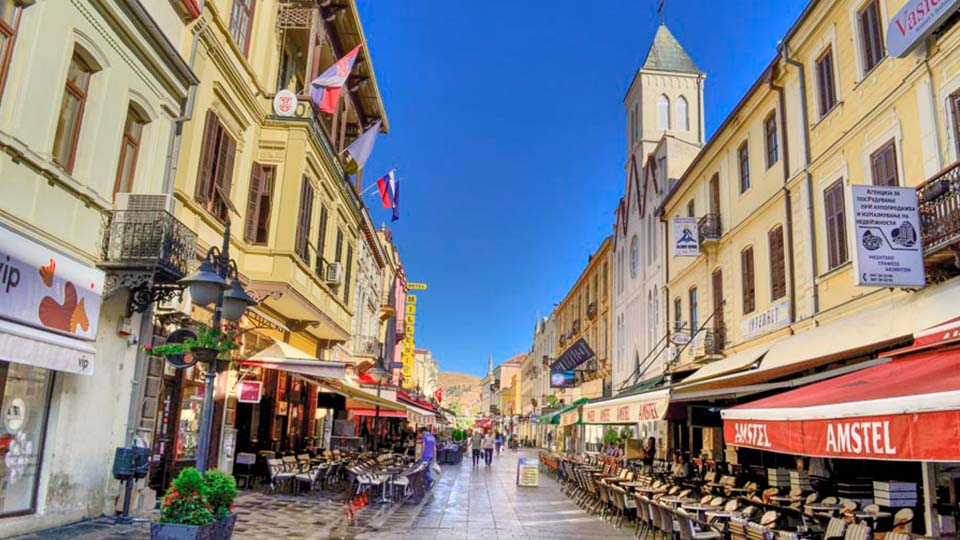
Shirok Sokak
The first consulate in Bitola was established in 1851 by the Austro-Hungarian Empire at that time, precisely at Shirok Sokak. Later it will be done by the British and the French, followed by the consuls from Russia, Italy, Serbia, Bulgaria and Romania. The first lamps of Shirok Sokak removed the darkness from the Clock Tower next to the Officer’s House exactly at 17:00 on December 24, 1924. At that time, Shirok Sokok had offices of numerous foreign companies, prestigious restaurants, pastry shops, a branch of the Franco-Serbian Bank. That first consul period was the inspiration for numerous consuls songs, for the carriages, for the pianos, for the famous ckembe stew, for the Vlach district and the yellow houses, for love. The dream of the citizens of Bitola their city to become consul city once again, were achieved with the independence of Macedonia.
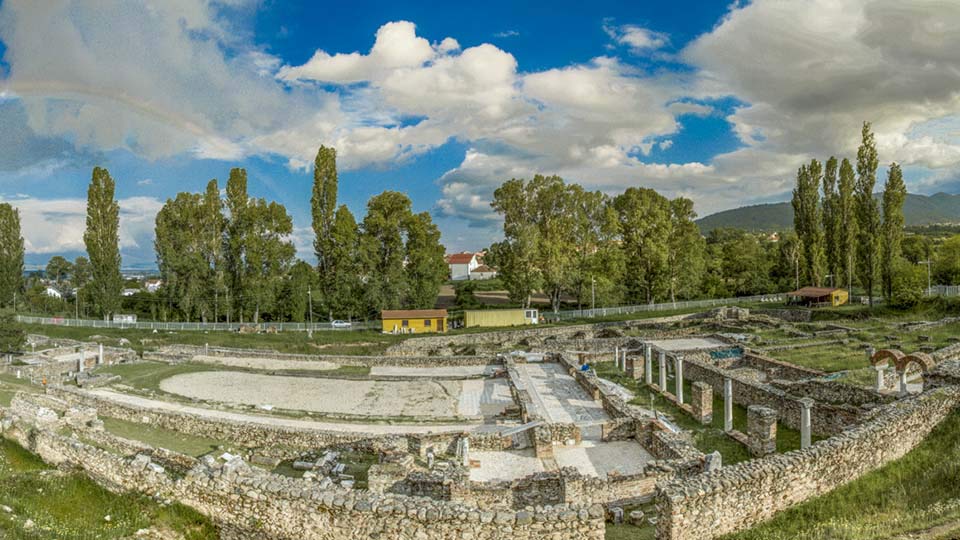
Heraclea Lyncestis (4th century BC)
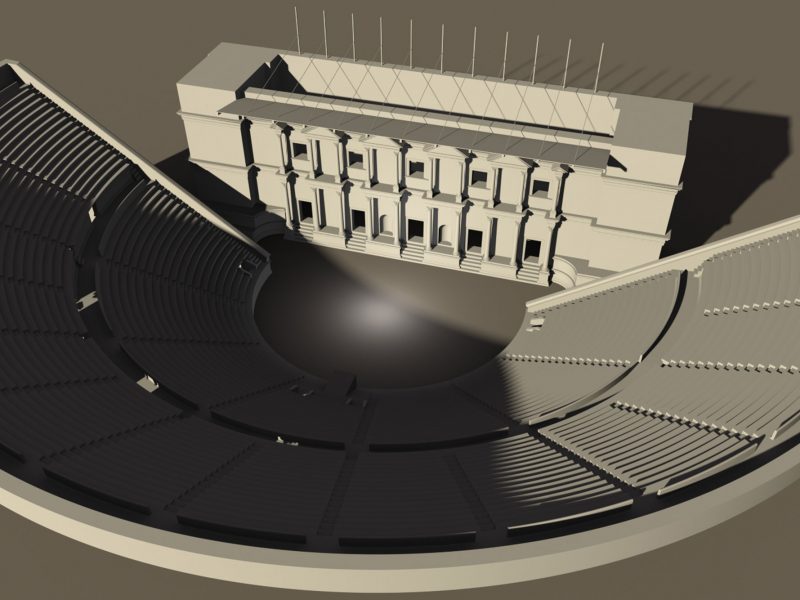
Heraclea Lyncestis is one of the most famous Macedonian ancient cities, located in the immediate vicinity of Bitola. It was founded in the middle of the 4th century BC by Philip II of Macedonia. The city was a developed military-strategic centre on the north-western border of the Macedonian area of Linkersida at that time (today’s Bitolsko Pole). Located on the most important road of that time, Via Egnatia, Heraclea becomes its most important station in the region. In the Early Christian period it was bishop’s seat. In Heraclea, portico with honorary monuments, small and large basilica, Roman bath, theater, city fountain of Justinian from the 6th century, a bishop’s residence, were discovered. Life in Heraclea dies at the end of the 6th century. Today it is a significant archaeological site, but also a place for cultural manifestations.
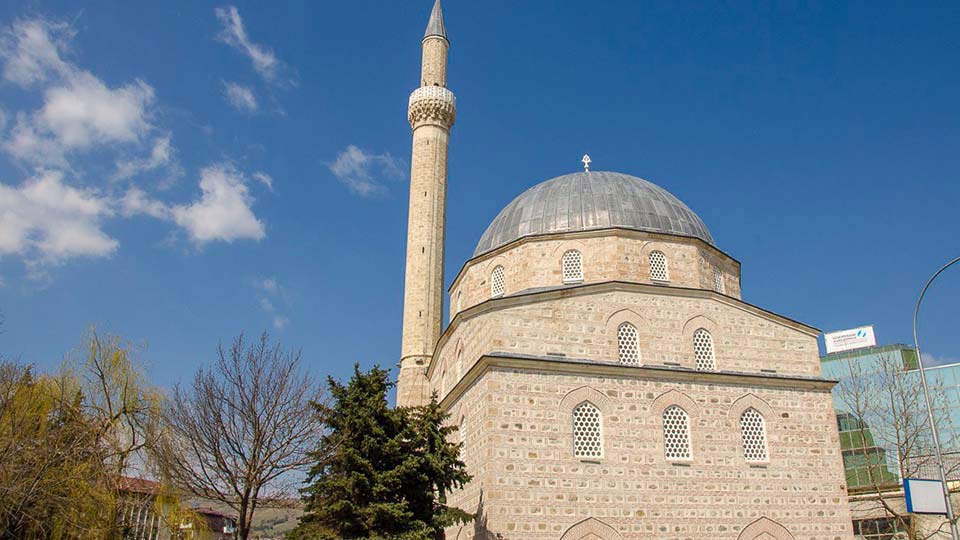
Isaac Mosque (1508)
Iskhak Chelebi Ibn Issa mosque, as its full name is, is one of the oldest preserved mosques in Bitola and one of the most famous Muslim sacred cultural and historical facilities in Macedonia. With a minaret at a height of about 50 metres, the mosque dominates the space opposite the Clock Tower and the Great Bezisten. In its large courtyard there are several graves, attractive for the sophisticated forms of the sarcophagi. This one-room under-dome mosque is a true resting place for its founder. The main decorative element in the porch are the four pillars, which dominate the space, placed on high stone posts that end with identical capitals. Through the main portal, one enters the praying space with lavish decoration. The particularity of this mosque is due to the game of colours and shapes, which are reflected in every part of the mosque.p>
Clock Tower (XVII century)
The Clock Tower is the most recognizable monument that identifies Bitola. It is located in the very centre, where the city clock dominates the space with its height and broadcasts popular music when it is clocking. Although documentation of its building was not found, it is thought to have been built during the period of Turkish rule, in the 14th century, along with the Yeni mosque. It is 33 metres high, placed on a square base. On the north side there is a semicircular entrance and internal spiral stone stairs. It is divided into three floors, and on the top is the clock mechanism on all four sides. The uppermost part is a small dome, which offers a beautiful panorama of the consul city and its wider surroundings. The park around the tower is a place where citizens gather on Christmas Eve and light candles along the lawn and pavement.